DeHMY MME M18 PNP Sensor: Specifications, Working Principle, Features, and Applications
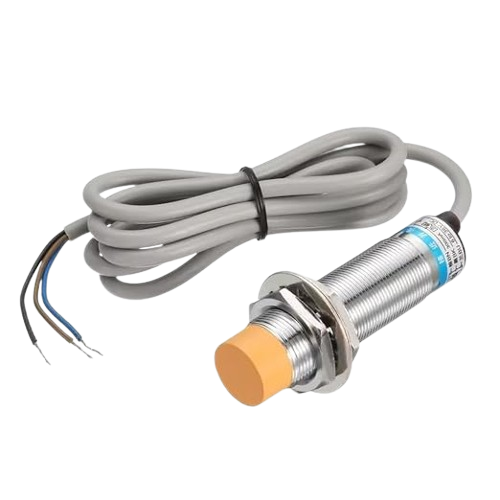
Overview
Introduction
In modern industries, sensors play a very important role in automation and control systems. One of the most widely used proximity sensors is the DeHMY MME M18 PNP sensor. This sensor is designed for reliable object detection without any physical contact, making it suitable for manufacturing, assembly lines, robotics, and many other industrial processes.
The DeHMY MME M18 PNP sensor is valued for its accuracy, durability, and easy integration with controllers like PLCs and relays. With its compact M18 cylindrical housing, it fits perfectly in machines where space is limited. Because of its strong construction and high performance, it has become a preferred choice in industries that need continuous and precise monitoring.
What is DeHMY MME M18 PNP Sensor?
The DeHMY MME M18 PNP sensor is an inductive proximity sensor. This means it detects metallic objects when they enter its sensing field. Instead of physical contact, it uses electromagnetic fields to sense the object, which increases the sensor’s life and reduces maintenance compared to traditional mechanical switches.
The PNP output makes it very easy to connect with automation devices. In simple terms, whenever the sensor detects a metal object, it sends a positive signal to the controller. This functionality is widely used in industries for safety, monitoring, and process control.
Key Specifications of DeHMY MME M18 PNP
Here are the general specifications that define the performance of this sensor:-
Model: DeHMY MME M18 PNP
-
Sensor Type: Inductive Proximity Sensor
-
Housing Size: M18 cylindrical body
-
Output Type: PNP (Positive switching output)
-
Sensing Distance: Usually between 5mm to 8mm, depending on the version
-
Operating Voltage: 10V – 30V DC
-
Current Consumption: Low power consumption for energy saving
-
Switching Frequency: High frequency for quick response
-
Protection: Short-circuit protection and reverse polarity protection
-
Material: Nickel-plated brass or stainless steel housing
-
Operating Temperature Range: -25°C to +70°C
Features of DeHMY MME M18 PNP Sensor
Some of the key features that make this sensor popular are:-
Non-contact detection – Works without touching the object, ensuring long life.
-
Compact design – Fits in small spaces due to its M18 housing.
-
Durable build – Made with strong materials for use in tough industrial conditions.
-
Fast response time – Detects objects quickly, ideal for high-speed production lines.
-
Easy wiring – Simple 3-wire connection for quick installation.
-
Built-in LED indicator – Shows the status of the sensor clearly.
-
Reliable performance – Works consistently even in continuous operations.
-
Safety features – Equipped with overload and reverse polarity protection.
Types of DeHMY MME M18 Sensors
The DeHMY M18 sensor series comes in different versions depending on application needs:-
DeHMY MME M18 PNP Normally Open (NO): Gives output only when an object is detected.
-
DeHMY MME M18 PNP Normally Closed (NC): Output is active until an object is detected.
-
DeHMY MME M18 NPN Sensor: Works similarly but provides NPN output for different wiring systems.
-
Shielded (Flush Mount) Sensor: Can be mounted directly into metal surfaces with reduced sensing distance.
-
Unshielded (Non-Flush Mount) Sensor: Offers longer sensing distance but needs more installation clearance.
Working Principle of DeHMY MME M18 PNP
The DeHMY MME M18 PNP sensor works on the principle of inductive proximity detection. Inside the sensor, an electromagnetic field is generated at the sensing face. When a metallic object comes close, it disturbs this field. The sensor detects this change and sends a positive PNP output signal to the connected device such as a PLC or relay.
Simple Example:
Imagine a conveyor belt carrying metal cans in a packaging factory. A DeHMY MME M18 PNP sensor is fixed near the belt. Whenever a can passes in front of the sensor, it detects the can and sends a signal to the machine. This signal can be used to stop the belt, fill the can, apply labels, or count the number of items. This example shows how the sensor works without physical touch but still ensures precise and reliable detection.Applications of DeHMY MME M18 PNP Sensor
Because of its versatility and strong performance, the sensor is used in many fields:-
Manufacturing Industry – Detecting metal parts on production lines.
-
Packaging Industry – Checking the presence of containers before filling or sealing.
-
Automated Machinery – Monitoring moving parts and preventing collisions.
-
Robotics – Object detection for robotic arms and automated systems.
-
Textile Machines – Detecting metallic components in high-speed operations.
-
Food and Beverage Industry – Used in automated filling and packaging systems.
-
Process Control – Ensuring correct sequence in industrial processes.
Advantages of Using DeHMY MME M18 PNP Sensor
-
Long life span due to non-contact operation.
-
Reliable performance in challenging environments.
-
Easy installation with simple wiring and mounting options.
-
Low maintenance compared to mechanical switches.
-
High precision detection of metallic objects.
-
Cost-effective solution for automation requirements.
Example Wiring Connection
The DeHMY MME M18 PNP sensor generally has three wires:-
Brown Wire: +24V DC supply
-
Blue Wire: Ground (0V)
-
Black Wire: Output (connects to PLC or control input)
Practical Example in Industry
In an automotive assembly line, the DeHMY MME M18 PNP sensor is often installed to detect metal car parts moving on the conveyor. When a part reaches a certain point, the sensor sends a signal to the robotic arm to perform welding or tightening. This ensures that every part is correctly processed without manual checking, saving time and reducing errors.
Conclusion
The DeHMY MME M18 PNP sensor is a compact, durable, and reliable proximity sensor widely used in industrial automation. Its PNP output, robust housing, and accurate detection make it ideal for manufacturing, packaging, robotics, and many other applications. With different variants like Normally Open, Normally Closed, Shielded, and Unshielded, it provides flexibility for a wide range of requirements.
Whether you are working on a simple detection task or a complex automation system, the DeHMY MME M18 PNP sensor ensures efficiency, safety, and long-term performance. Its ability to work without physical contact, combined with easy wiring and installation, makes it one of the most practical choices for industries worldwide.
Where to Buy
Prices may vary. Click on "Buy Now" to check current availability and pricing.
Administrator
Frequently Asked Questions
Common questions about DeHMY MME M18 PNP Sensor: Specifications, Working Principle, Features, and Applications. Find answers to the most frequently asked questions.
User Reviews & Comments
Share your experience with this IoT Blog. Your feedback helps our community make informed decisions!
Share Your Experience
Help others by sharing your thoughts about this IoT Blog.
Related Blogs
Explore more IoT Blogs in the same category
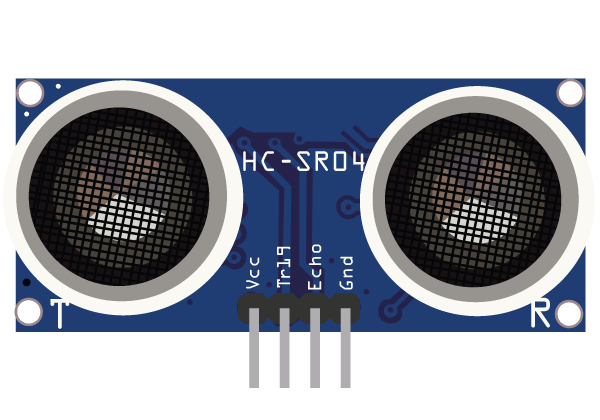
Ultrasonic Sensor HC-SR04 for IoT: Working, Applications, Circuit, and Integration Guide
Sensors
Discover how the Ultrasonic Sensor HC-SR04 works and how to use it in IoT projects. This detailed guide covers its working principle, pin configuration, interfacing with Arduino, applications in smart systems, and complete circuit setup. Ideal for beginners and IoT developers looking to integrate distance sensing in real-time projects.
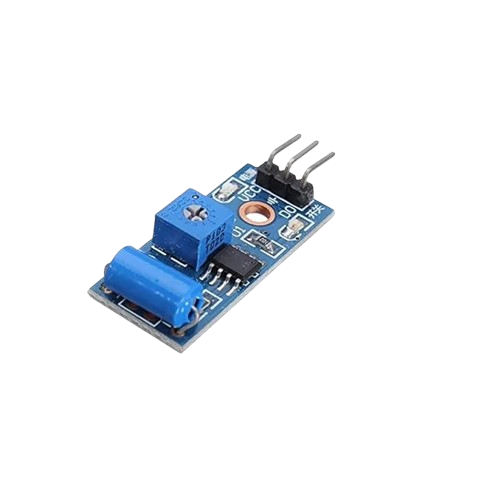
Vibration Sensor: Working, Types, Applications, and Complete Guide
Sensors
A vibration sensor is a crucial device used to detect and measure vibrations in machines, structures, and environments. This complete guide covers how vibration sensors work, their different types, applications across industries, and factors to consider before selection. Learn how these sensors improve safety, enhance performance, and prevent costly equipment failures.
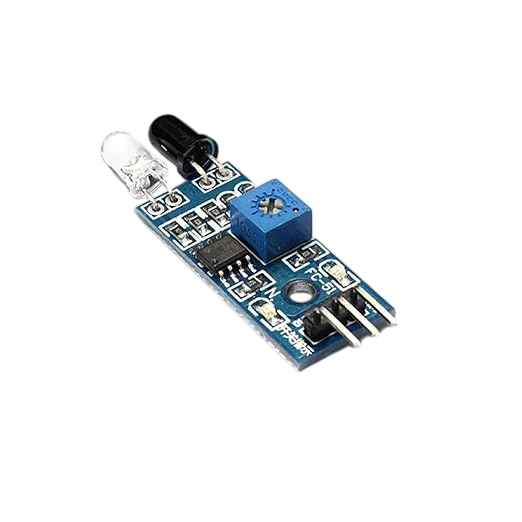
Best IR Sensor for IoT Projects – Types, Working, Interfacing, and Applications Explained
Sensors
Discover everything about IR sensors used in modern IoT applications. Learn their types, working principles, interfacing methods, and real-world uses. This complete guide helps developers and engineers choose the best IR sensor for smart electronics and automation projects with reliable performance.
No Reviews Yet
Be the first to share your experience with this IoT Blog!